
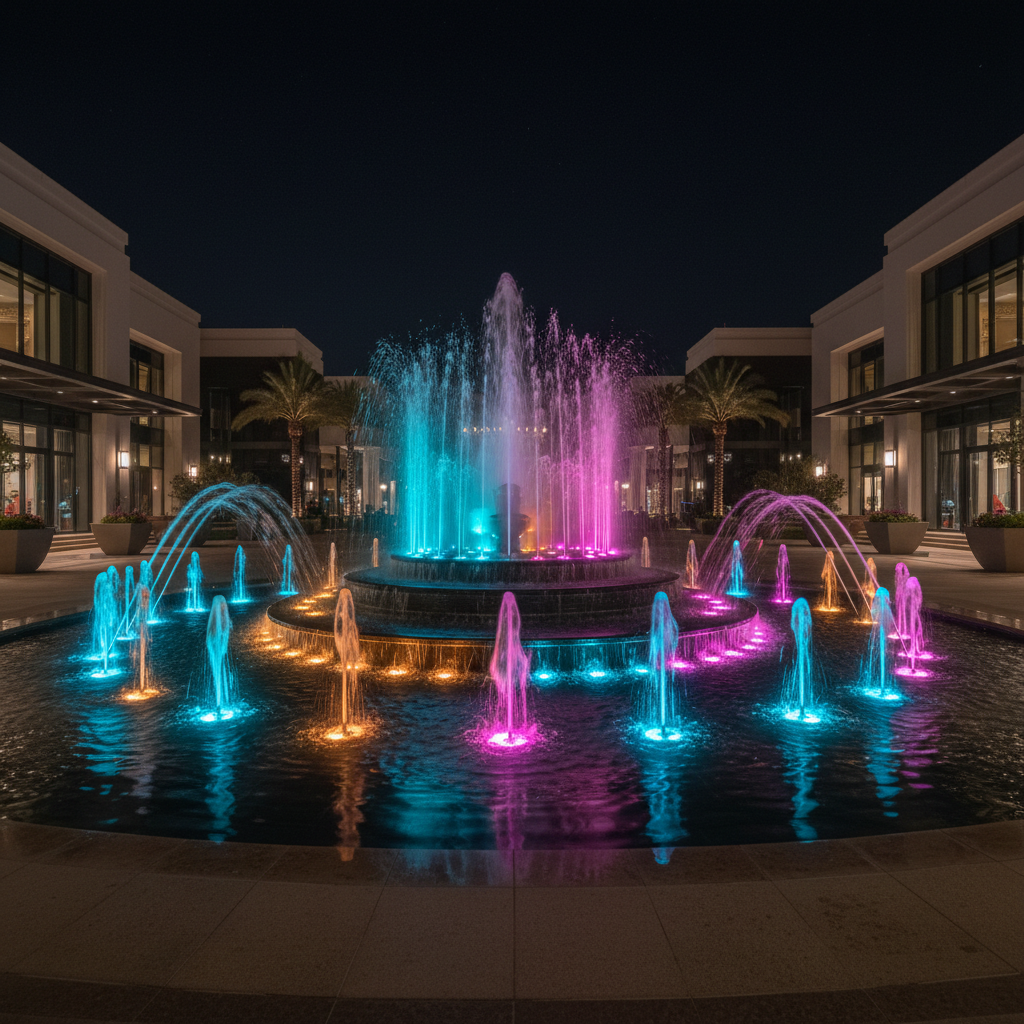
Underwater LED lights are no longer just functional fixtures for pools or fountains. With the advancement of LED technology, they not only provide illumination but also create ambiance, making water features lively and enchanting. Whether it’s a backyard garden, a public fountain, or a private swimming pool, choosing the right underwater LED lights can dramatically enhance the overall visual appeal of your landscape.
1. Key Features of Underwater LED Lights
Modern underwater LED lights offer the following advantages:
-
IP68 Waterproof Rating
Underwater lights are often submerged for long periods. The IP68 rating ensures safe operation underwater, preventing leaks or short circuits, and extending service life. This rating also means the lights can withstand water pressure and light water currents, suitable for ponds, fountains, or even small waterfalls. -
Corrosion-Resistant and Durable Construction
Stainless steel or aluminum alloy housings, along with anti-rust coatings, allow the lights to remain stable and visually appealing in humid or aquatic environments. This is especially important for saltwater pools or chemically treated water features. -
Energy-Efficient and Bright
LED sources provide high energy efficiency while delivering sufficient light output, ensuring clear and vibrant illumination. From single 3W LEDs to multi-LED combinations, they meet different brightness requirements. Compared with halogen or fluorescent lights, LEDs consume less power and require less maintenance. -
Multiple Colors and Adjustable Lighting
Options include warm white, natural white, cool white, and RGB colors, allowing flexible adjustment for different settings. For instance, during pool parties, RGB gradient modes can be used, while warm white is ideal for a cozy evening atmosphere. -
Low-Voltage Safety Design
DC 12V/24V power reduces the risk of electric shock, making it safe for homes and commercial areas. Even with children or pets nearby, these lights provide an extra layer of safety.
2. Application Scenarios
Underwater LED lights are versatile and can be used in a variety of settings:
-
Home Swimming Pools
Multiple-point or focused lighting enhances nighttime pool aesthetics, making the water sparkle. Depending on pool size, single or multiple LED lights can be arranged for even coverage. -
Fountains and Landscape Ponds
Coordinated with water movement and light color changes, fountains become more artistic. RGB LEDs can create festive or event-based atmospheres, synchronizing with music for dynamic effects. -
Backyard, Ponds, and Garden Landscapes
Even small ponds, fish ponds, or rock waterfalls can be beautifully illuminated. The reflection on water surfaces adds a soothing nighttime ambiance. -
Public Spaces and Commercial Areas
Hotels, malls, or theme parks can use high-power lights to form lines, spotlights, or rhythmic lighting, delivering an immersive viewing experience. Gradient lighting near hotel pools can enhance the nighttime visual impact. -
Special Creative Installations
Art installations, holiday events, or water screen projections can incorporate underwater LEDs. Precise control allows interaction between water features and lighting, adding interactivity and visual interest.
3. Installation and User Experience
Installing underwater LED lights is flexible, but some considerations are important:
-
Embedded vs. External Fixtures
Embedded lights are suitable for steps or ground installation, while external fixtures can be hung or mounted on pool walls. Choose according to water feature structure and needs. -
Accessories for Easy Installation
Extension cables, splitters, and waterproof connectors make wiring easier, ensuring smooth power delivery to lights. Proper planning reduces risks of short circuits or power issues. -
Lighting Arrangement Design
Single or multiple LED lights can be arranged in dot, line, or spotlight patterns. Using dimmers or controllers, gradient or blinking effects can be achieved, creating dynamic water feature lighting. -
Durability and Safety
IP68 and corrosion-resistant design ensures longevity, while low-voltage operation adds safety. Lights maintain consistent brightness and color over long periods. -
Scalability
For large-scale water features or commercial landscapes, multiple lights can be combined to create layered lighting effects. Coordination with music, fountains, or moving water enhances the immersive experience.
4. User Experience
Many users have reported that adding underwater LED lights to backyard pools or gardens significantly improves nighttime visual appeal, providing both beauty and safety. RGB and dimmable options allow for flexible adjustments for holidays or special occasions, making water features interactive and interesting.
Even small garden ponds can achieve professional-grade effects with careful light placement. Energy efficiency and low maintenance make these lights easy to use long-term. Some DIY enthusiasts have even created “underwater light art” by combining different light sources, turning backyard evenings into perfect backdrops for gatherings or photography.
5. Product Series Reference Table
| Product | Application | Waterproof Rating | Features |
|---|---|---|---|
| 3W Single LED Underwater Light | Small pools, fountains, ponds | IP68 | Stainless steel housing, low-voltage safe |
| 3W 3-LED Underwater Light | Backyard water features, swimming pools | IP68 | Color adjustable, energy-efficient |
| 6-24W Adjustable Underwater Spotlight | Commercial fountains, landscape pools | IP68 | Adjustable angle, RGB color options |
These products can be combined and arranged according to different water feature needs to achieve professional lighting effects.
6. Conclusion
Underwater LED lights not only enhance the beauty and visual appeal of water features but also provide safety and comfort for nighttime use. From home gardens to commercial fountains, from single-color lighting to RGB effects, the flexible combination of fixtures and designs can meet diverse requirements. Whether creating a cozy ambiance or dynamic light and shadow effects, underwater LED lights are an essential element in any water feature design.